


The Honeywell GTCP36-150 series APU utilizes a sealed oil system.
To prevent heated oil vapors from creating excessive pressure within the gearbox, a small vent is incorporated into the oil system through a steel fitting located on the front of the gearbox.
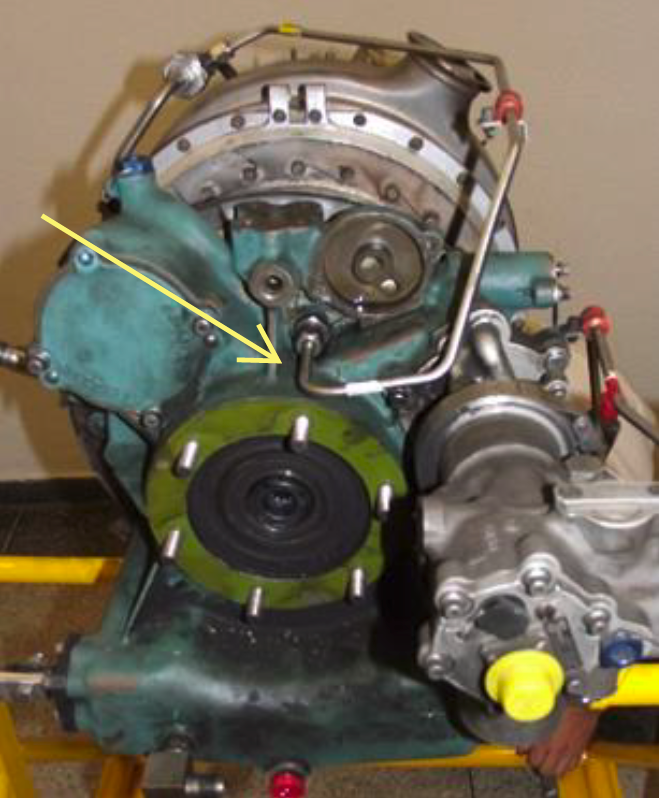
As with the GTCP36-150W found in Hawker 800 and 900 aircraft, this oil vent is typically routed overboard through a fuselage drain port.
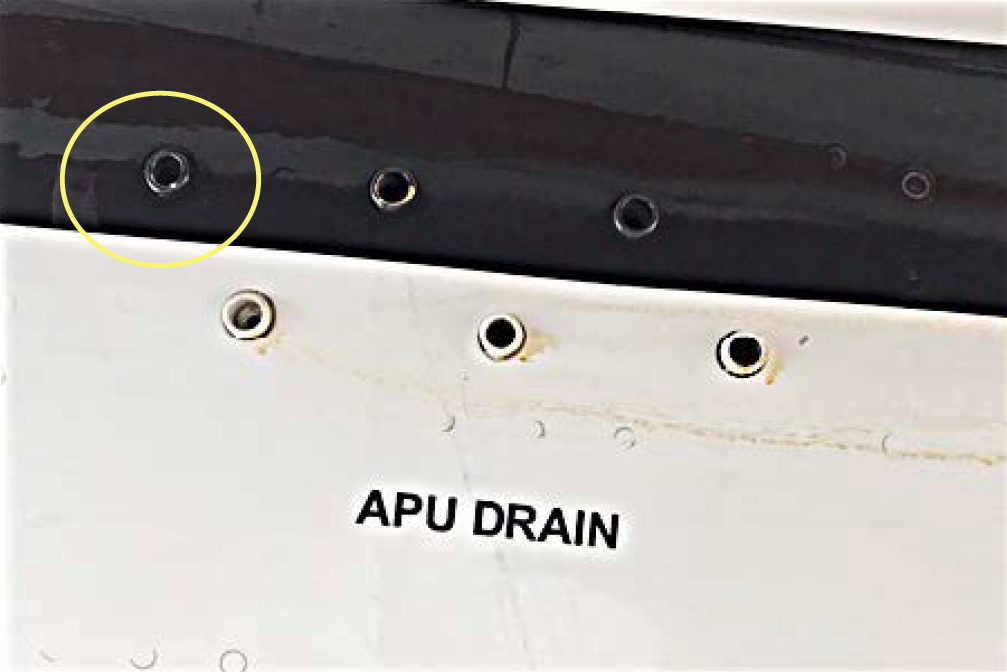
However, for many other GTCP36-150 series APU models, Honeywell developed an add-on known as the Ejector System. This system may be installed during APU production or incorporated later through a Service Bulletin.
How the Ejector System Works
As shown below, the Ejector System utilizes P3 air tapped from the APU turbine plenum housing. The air passes through a small orifice tube located within the ejector assembly. As this air exits with the APU exhaust gases, it creates a negative pressure on the steel line connected to the gearbox oil vent fitting.
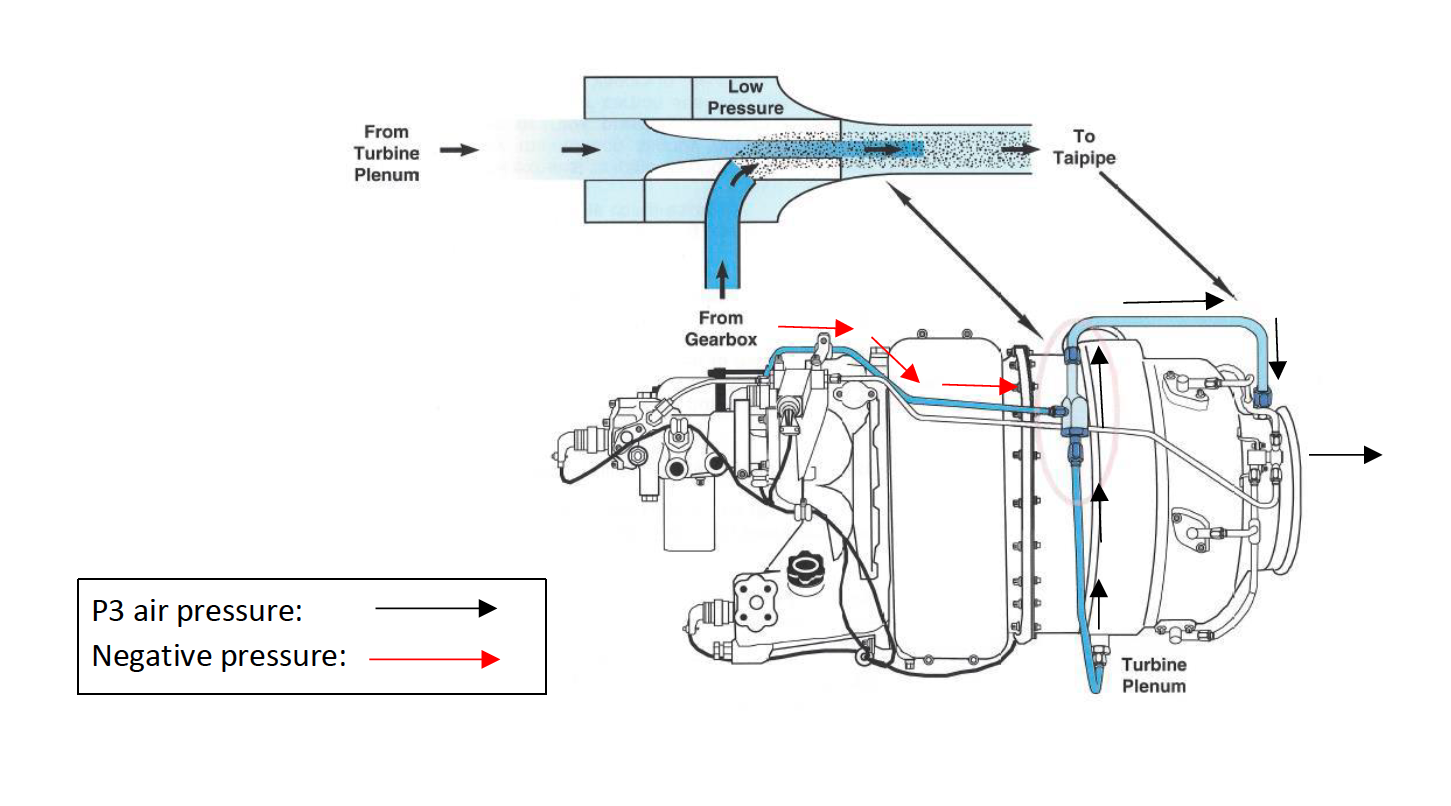
With this design, the Ejector System not only allows hot pressurized gases to escape the gearbox housing, but also creates a slight negative pressure within the gearbox. This negative pressure improves the sealing effectiveness of the oil system packings and seals compared to systems without an ejector.
As an added benefit, because the gearbox vent line is routed into the APU exhaust tailpipe rather than a standard overboard drain, oil residue no longer accumulates around the drain port or on the aircraft fuselage.
What Causes Oil to Vent Through the Ejector System?
There may be instances where a GTCP36-150 series APU experiences a low oil pressure shutdown due to oil loss through the Ejector System. But how does this occur?
As stated earlier, the gearbox oil system is a sealed, or “dead-headed,” system.
Under normal conditions, the negative pressure created by the Ejector System cannot draw oil from the gearbox because the system is sealed.
However, if that sealed system becomes compromised and air is allowed to enter through an unintended source—such as a failed oil dipstick packing, generator drive gearshaft pad seal, starter motor packing, or similar component—the negative pressure can begin drawing oil from the gearbox. The oil is then carried through the vent system and discharged into the APU exhaust stream.
Because the oil is burned away in the exhaust gases during operation, there may be no obvious external indication of a problem. In many cases, the first symptom is a low oil pressure shutdown caused by a significant reduction in oil quantity.
Corrective Action
Once the source of the unwanted air ingress is identified and repaired, the gearbox oil vent and Ejector System will return to normal operation.